
Dordogne or Provence: Which should you visit on your trip to France?
Don’t tell Paris or Normandy, but the southern part of France may be my favorite.
Okay, in all honesty, I love France as a whole and thoroughly enjoy every corner of this country that I get to visit! But there is something truly special about the south.
Maybe it is the hilltop villages. Or the rich history and culture. Don’t forget just how nice the people can be!
But most of us have a finite amount of time to spend on a trip to France, which makes this question very poignant: Dordogne or Provence?
It’s a TOUGH one! Because squeezing both in a single trip is difficult unless it’s a long trip. And BOTH are extremely fascinating and beautiful parts of the country.
But I’m going to do my best to help you decide which to go to based on categories like beauty, villages, food and wine, and more!
Don’t have time to read this now? Save it for later here!

Dordogne vs Provence: What Are the Main Differences?
While both of these places are unique and gorgeous destinations in France, let’s talk about the key differences between them.
Dordogne:
- Located in the Nouvelle-Aquitaine region of France.
- Not far from Bordeaux.
- Sarlat-la-Canéda is the main base, although there are larger towns too!
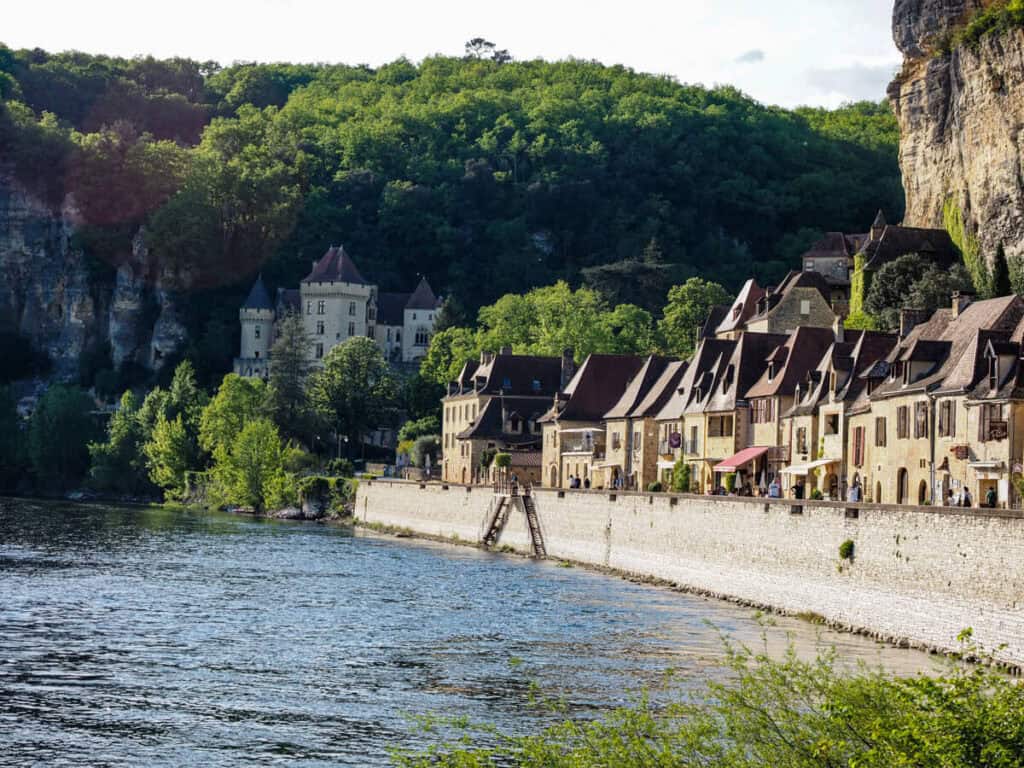
- Has award-winning Medieval villages including Beynac-et-Cazenac, Domme, La Roque-Gageac, and Castelnaud-la-Chapelle that are very close together along the Dordogne River.
- Dordogne River is stunning with dramatic cliffs.
- Known as the “Land of 1,001 Castles” for its vast amount of châteaux.
- Hundreds Years’ War history.
- Prehistoric caves.
- Less visited compared to Provence.
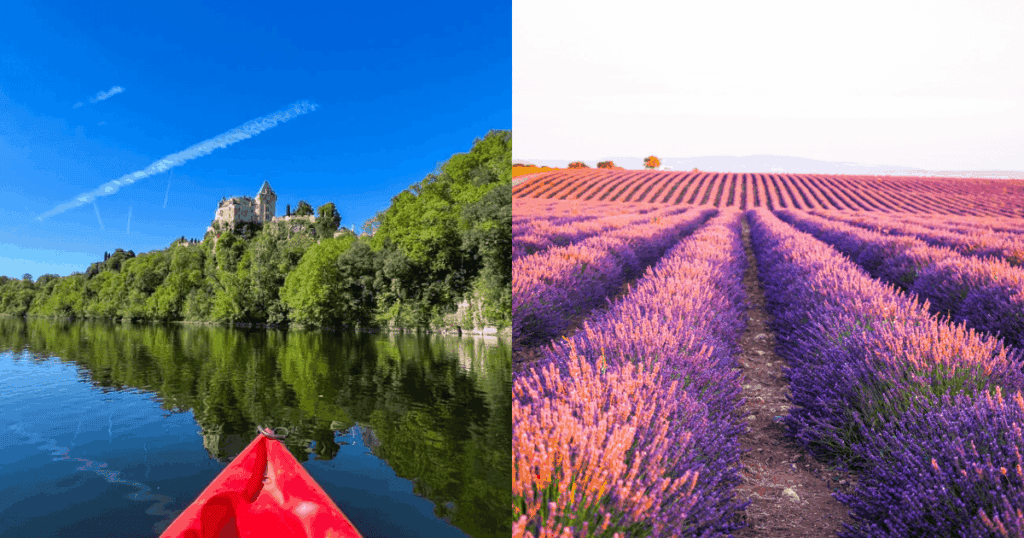
Provence:
- Located in the Provence-Alpes-Côte-d’Azure region of France.
- Avignon, Aix-en-Provence, and Marseille are the main bases.
- Known for the stunning Luberon Villages like Gordes, Roussillon, and Menerbes. So yes, they both have stunning villages.
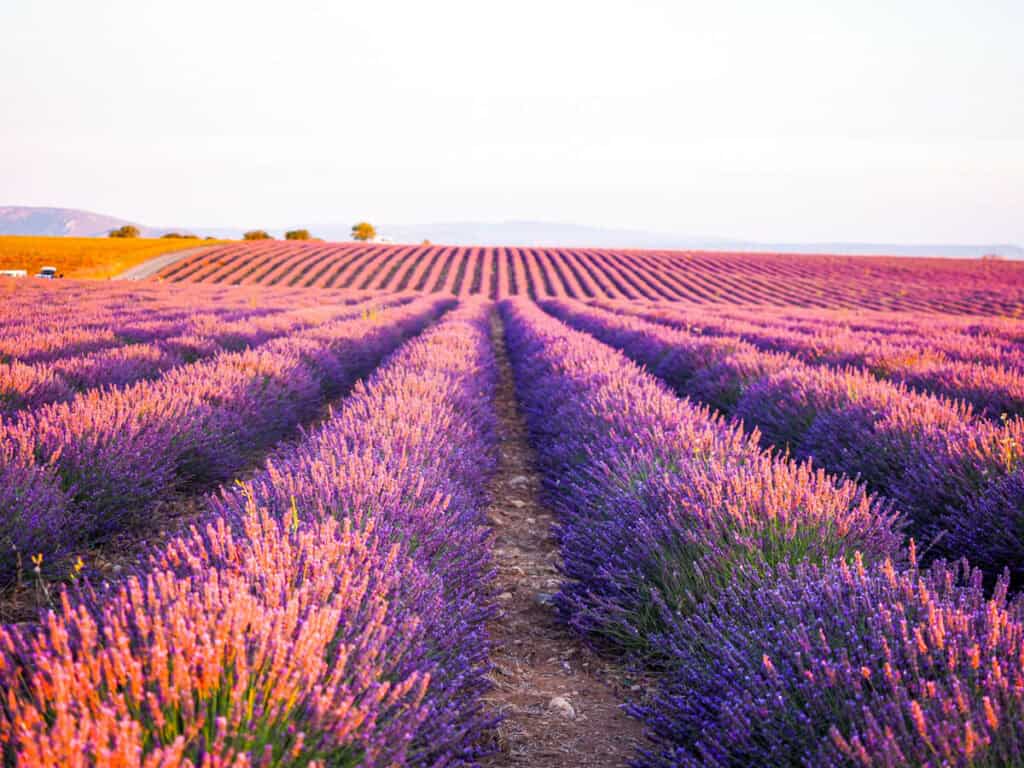
- Famous for lavender fields like in the Luberon, Sault, and Valensole.
- A lot of Roman ruins nearby like Pont du Gard, Glanum in Saint-Rémy-de-Provence, Arena of Nîmes nearby, Roman Theater in Orange, and Arles Amphitheater.
- Mediterranean coastline in Marseille as well as mountains.
Note: When discussing Provence, I am referring to the more historical and cultural region, not necessarily the entirety of the Provence-Alpes-Côte d’Azur region which includes the French Riviera.
Overall, these are very unique places on their own. So let’s dive deeper into which is best in various categories!
Dordogne vs Provence: Which is More Beautiful?
This is like asking if a nature-lover loves mountains or the coast better! As a lover of both, and a lover of these two areas of France, it’s a tough choice!
Here is what each offer for beauty!

Dordogne:
- Dramatic cliffs along the Dordogne River.
- Stunning gardens at Marqueyssac Gardens.
- SO. MANY. CASTLES.
- Ancient, prehistoric caves.
- Brantôme, known as the “Venice of Perigord.”
- Gorgeous villages.
Provence:
- Stunning villages in the Luberon.
- Immense rolling lavender fields in the early summer.
- Roman sites.
- More diverse landscapes between the mountains and Mediterranean coastline.
- Stunning, historical cities.
This may be a cop-out, but I think this depends on the time of year. Outside of lavender season, Dordogne wins for me! Castles, caves, beautiful towns, and dramatic cliffs are well worth it!
Provence is immensely stunning, so that makes this a challenge! But during lavender season, sorry, Provence wins.
Best Things to Do in Provence & Dordogne
Both places have lovely things to do. And both offer incredible markets!
I even have a guide on the best things to do in the Dordogne here!
But here are things to check out in each place.
Dordogne:
- Kayaking on the Dordogne River for epic views and castles on cliffs.
- Explore Sarlat-la-Canéda to enjoy the Medieval architecture and enjoy its market days.
- Visit villages like Domme, Beynac-et-Cazenac, La Roque-Gageac, and Castelnaud-la-Chapelle.
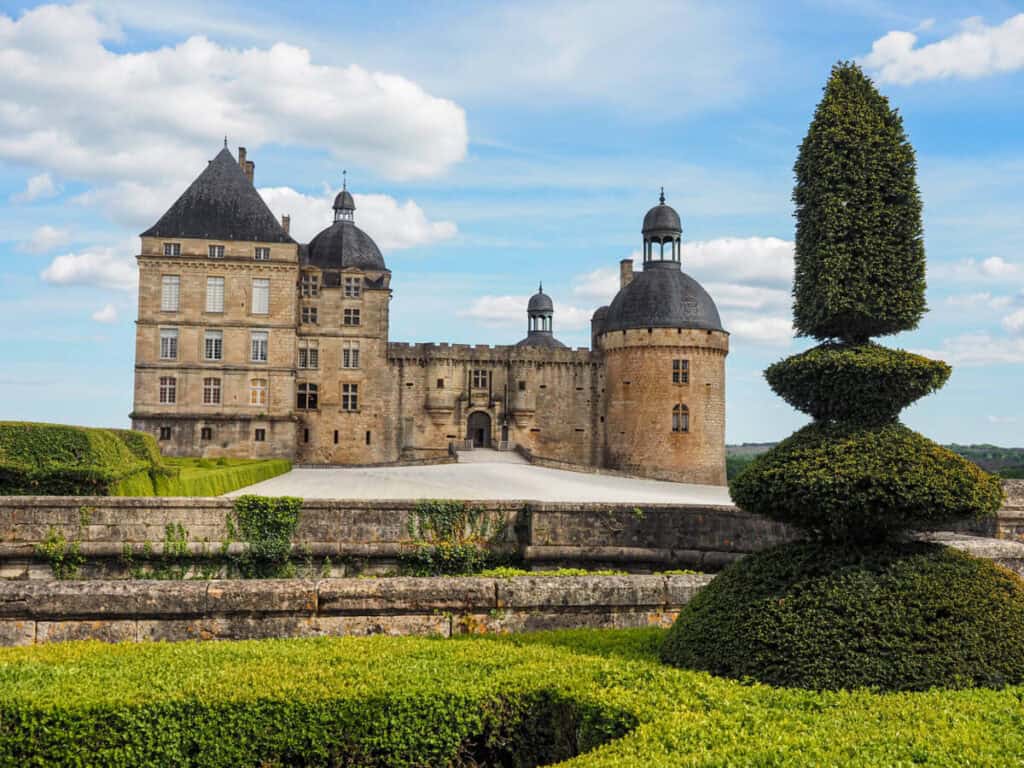
- Explore castles like Château de Beynac, Château de Hautefort (and the other Ever After filming locations!), Château de Milandes, and Castelnaud Castle.
- Go on a hot-air balloon ride over the Dordogne river and villages.
- Visit Marqueyssac Gardens.
- Wine tasting in Bergerac.
- Explore ancient painted caves like Lascaux IV (replica cave), Grotte de Rouffignac, and Grotte de Font-du-Gaume, as well as other caves like Grotte de Domme and Gouffre de Proumeyssac.
- Explore Brantôme for its beauty and to see Brantôme Abbey.
- Visit the department capital of Perigueux.
Provence:
- Visit the Pope’s Palace in Avignon. Where some of the popes lived in the 14th century.
- Visit the Luberon villages.
- Explore Senanque Abbey.
- Sip rosé or sip bold Châteauneuf-du-Pape nearby.
- Walk the Van Gogh Route in Saint-Rémy-de-Provence.
- Explore the “Venice of Provence” in L’Isle-sur-la-Sorgue.
- Visit several iconic markets including in L’Isle-sur-la-Sorgue and the ones in the Luberon.
- Enjoy walking through the beautiful city of Aix-en-Provence.
- Visit Roman ruins at Pont du Gard (nearby), Glanum, Arles Ampetheater, Roman Theater in Orange, and Arena de Nîmes (nearby).
- Explore the Calanques between Marseille and Cassis.
- Take in the culture, history, and food of Marseille.

Now, these are hardly exhaustive lists, but, as you can see, both areas have a lot of things to do!
However, Provence is much bigger and has a more diverse landscape, meaning there is more to do here. With many good-sized cities too, including France’s 2nd-most populated city of Marseille, I’d say Provence offers the greatest variety of things to do!
Dordogne or Provence: Which Has Better Food and Drinks?
Both have delicious cuisine and wine/drinks! But let’s break it down.

Dordogne:
- Popular foods: Foie gras, paté, rillette, duck confit, duck breast, black truffles, Sarlat potatoes (thinly sliced potatoes cooked in duck fat with garlic and parsley), walnuts, and strawberries.
- Drinks: Bergerac and Monbazillac dessert wine. They also offer sweeter walnut wine.
Provence:
- Popular foods: Bouillabaisse (seafood stew), ratatouille (veggie dish), soupe au pistou (veggie and white bean soup topped with something similar to pesto), aioli, tapenade, olives, calissons (candy), and herbes de Provence.
- Drinks: Rose, pastis, and you’re so close to Châteauneuf-du-Pape (one of the best wine regions of France).

To me, even though I LOVE duck confit, I’m going to go with Provence for better food and drinks. I really enjoy their vegetable-forward dishes with a lot of flavor. Also, their tapenades are a thing of beauty. And when it comes to drinks, I do love a glass of rosé and one of my fave wine regions ever, Châteauneuf-du-Pape is so close that you can take a half-day tour from Avignon.
Provence or Dordogne: Who Has the Better Villages and Towns?
Woof, this is another toughie, because neither is lacking on gorgeous villages. In fact, many boast villages that fall on the Les Plus Beaux Villages de France (AKA the Most Beautiful Villages in France) list.
Here are some great villages and towns in each that are well worth visiting!
Dordogne:
- Domme
- La Roque-Gageac
- Castelnaud-la-Chapelle
- Beynac-et-Cazenac
Bonus: Sarlat-la-Canéda isn’t a small town, but it’s a small city for sure, making it a charming place to explore! Brantôme is another place to go visit!
Provence:
- Les-Baux-de-Provence
- Moustiers-Saint-Marie
- Gordes
- Roussillon
- Menerbes
- Lourmarin

Bonus: You also have cool places to explore like L’Isle-sur-la-Sorgue, Saint-Rémy-de-Provence, and cities like Marseille, Avignon, and Aix-en-Provence.
I think if we’re going pound for pound, Provence wins on the best towns to visit.
Again, this is tough because both places offer incredible towns and villages to explore, many of which are award-winning.
Provence has many famous ones too including Gordes, Rousillon, Menerbes, and Lourmarin in the Luberon, as well as Les-Baux-de-Provence and the growing-in-popularity Moustiers-Saint-Marie.
However, there are lesser-known gorgeous villages to visit too.
I will say that the villages in the Dordogne are likely less frequented compared to the popular villages in Provence simply because it doesn’t get as much tourism. That being said, that could rule in the Dordogne’s favor!

Provence vs. Dordogne: Which is Better for History?
This really does depend on what kind of history that you’re interested in.
Sure, both, to some degree, offer Roman ruins and evidence of Roman history. But Dordogne also offers prehistoric history through painted caves. Let’s compare.

Dordogne:
- Ancient painted caves.
- Ancient prehistoric caves in general.
- Hundred Years’ War fortifications like Château de Beynac or the fortified town of Domme.
- Historical castles in general.
- Vesunna Gallo-Roman Museum in Perigueux.
- Gallo-Roman Villa in Montcaret.
Provence:
- Ancient city of Glanum, which pre-dates Roman times.
- Arles Ampetheater and other sites.
- Roman Theater in Orange.
- Pont du Gard nearby (ancient Roman aqueduct).
- Arena de Nîmes nearby.
- Palais des Papes (Pope’s Palace during the 14th century) in Avignon.
- Senanque Abbey (Medieval monastery).
- Château des Baux-de-Provence (Medieval fortress ruins).

I’ll be honest, for me, I think the Dordogne wins on historical sites. Between all the historical castles and ancient prehistoric caves, it is a fascinating area to explore!
I’m not saying Provence isn’t great! I loved exploring Glanum, Pont du Gard, the Pope’s Palace, and Senanque Abbey. But Dordogne squeaks by on this one.
Which is More Affordable to Visit: Provence or Dordogne?

I will say that the Dordogne is more affordable to visit overall. It’s not as touristy as Provence, which is popular in the early summer when the lavender is in bloom. Provence is also popular for the Luberon villages and the popular cities and towns.
However, I found it wasn’t terribly priced outside of lavender season!
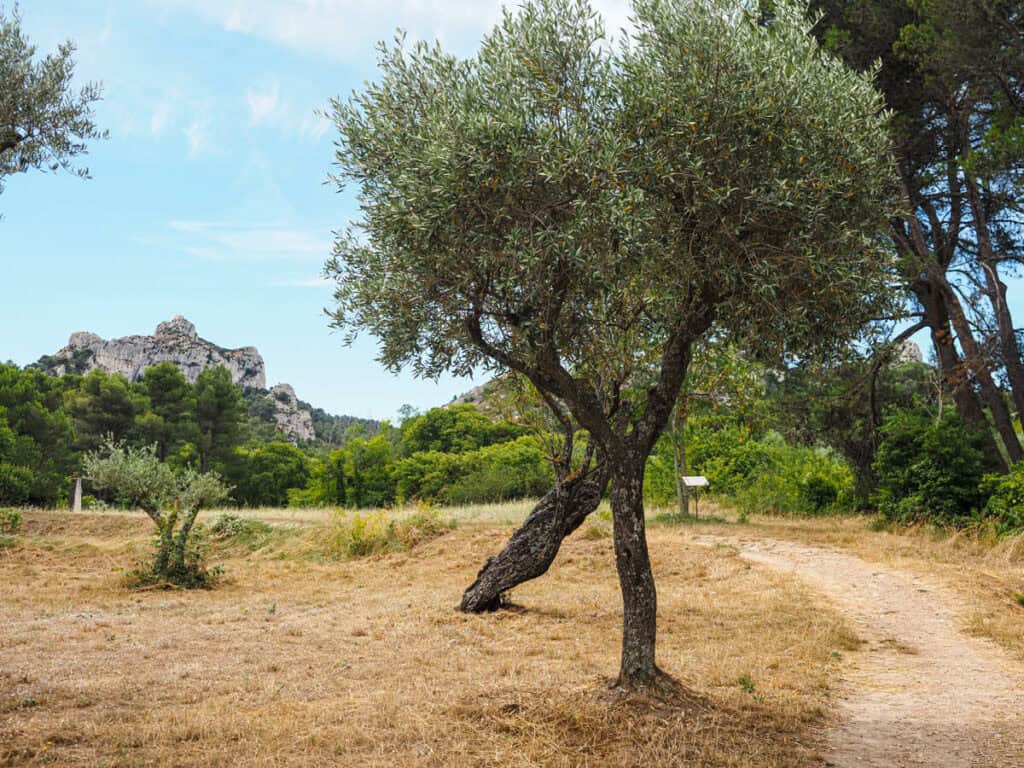
Provence is easier to navigate. This is simply because you can take a train to a lot of places. Avignon, Aix-en-Provence, Marseilles, Cassis, Arles, and L’Isle-sur-la-Sorgue have train stations.
You can even take a high-speed TGV train from Paris to Avignon, Aix-en-Provence, and Marseille between 2 hours, 45 minutes-3.5 hours!
You can also visit Saint-Rémy-de-Provence by bus from Avignon.
This makes Provence a winner for first-time visitors to the South of France too!
Oh, and there are a lot more tour options that can take you to lavender fields, to Roman ruins, wine tasting, etc. from places like Avignon, Marseille, and Aix-en-Provence.
Whereas the Dordogne doesn’t really have a TGV station, and your best bet is to take the TGV to Bordeaux or Toulouse and drive.
There are trains in the Dordogne, but it isn’t as convenient.
Regardless, having a car is the best way to navigate both the Dordogne and Provence to visit smaller towns and villages. Check rental car prices here!
It’s also helpful to download offline maps on Google, and I like getting an eSIM too from Airalo to use when I need data (offline maps is still essential, though, as you may lose service on back-country roads).
But overall, Provence is easier to navigate without a car. However, that means Dordogne is less visited, which is in its favor.
As an added bonus, because Provence is more popular, it is easier to get by in English. Although the Dordogne wasn’t bad either. Either way, it is always a good idea to learn some basics!
Which Should You Visit: Dordogne or Provence?

If it were up to me, I’d say Provence is better to visit overall if we’re comparing the two with these categories above.
However, personally, I would choose the Dordogne outside of lavender season, and Provence during lavender season.
Yes, the lavender season is that magical. Plus summertime sees local festivals too!
But I love the Dordogne. It’s less busy (not saying it doesn’t have busy times/places too!), feels more under-the-radar, and has so much charm and history.
Really, it is such a tough choice.
However, this isn’t about me! Let’s breakdown which area of France is better for you based on your needs/interests:
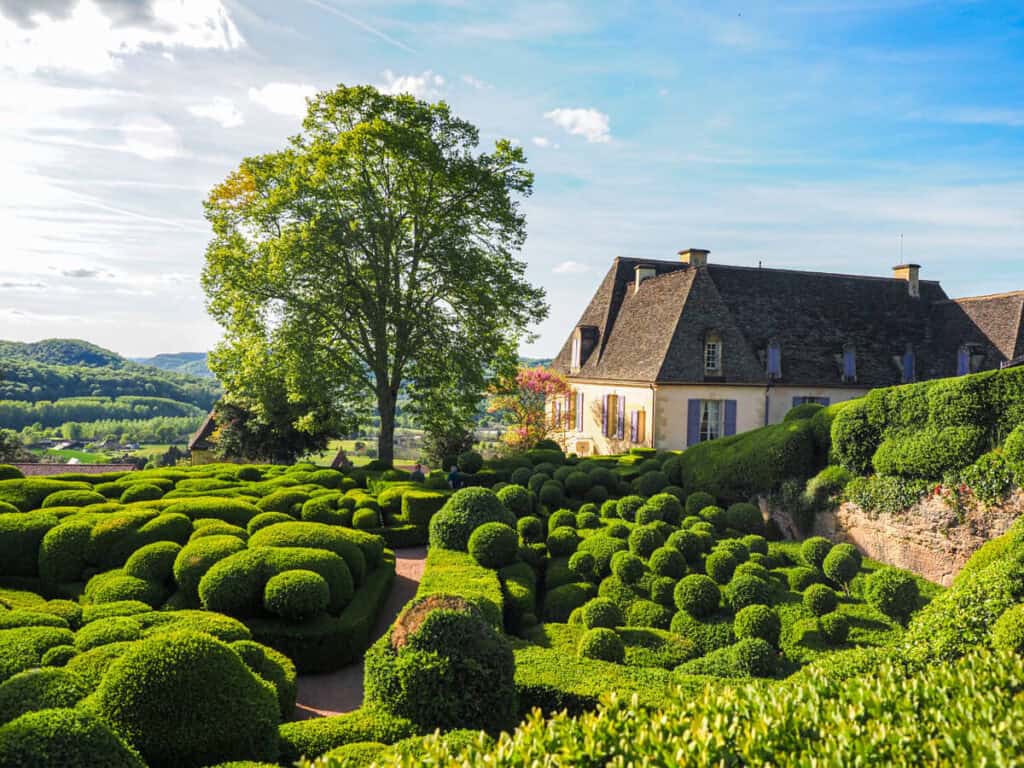
Choose the Dordogne if you want:
- Lesser-visited spots.
- Prehistoric history.
- To visit several castles.
- Budget-friendly spots to stay.
- Beautiful scenery.
- Stunning towns and villages.
- To eat great duck, goose, truffles, and walnuts.
- Dramatic cliffs along the Dordogne River.
- A fabulous road trip destination in a smaller area.
Choose Provence if you want:
- A lot of Gallo-Roman history.
- Lavender fields in summer.
- Stunning towns like Gordes and Roussillon.
- To eat tapenade, olive products, delicious seafood, and veggies.
- To sip incredible rosé and have great wine.
- An easier to navigate destination without a car.
- A more diverse landscape road trip.

Where to Stay in Dordogne & Provence
Now there are plenty of places to stay in both places. However, here is a good idea of places to check out while here!
Dordogne:
- Sarlat-la-Canéda: We loved this Airbnb in the heart of town. Other options include Plaza Madeleine & Spa and La Villa des Consuls.

Provence:
- Avignon: I’ve enjoyed this Airbnb in the past as well as La Mirande for a more luxurious experience. La Maison des Augustins is a good option too.
- Aix-en-Provence: Hotel des Augustins, Renaissance Aix-en-Provence, Maison Dauphine, and Villa Gallici.

Best Time to Visit Dordogne and Provence

I would avoid both in the winter. Not because they aren’t great, but because a lot of places in the villages and towns shut down during the winter months or have shorter hours.
That being said, Sarlat-la-Canéda has a Christmas market, as does Aix-en-Provence and Avignon!
But the best times to visit both places is between April-October. That is when most stuff is open and the weather is better.
If you’re hoping to visit Provence for lavender fields, opt for mid-June through early-July, although this keeps changing/shifting based on the weather that year.
If you want to enjoy good weather and fewer crowds, opt for April and September/October. We went to Provence in late September/early October on one visit and it was great and not crowded (although markets can be busy).
We also visited the Dordogne in April, and it was fabulous and not busy at all!
How Many Days Do You Need in Provence and the Dordogne?

You can spend anywhere from 3 days to 10+ and still not see everything! More time is always better! However, as the Dordogne is smaller, you could spend 3-5 days here and get a great feel of the area!
Provence is larger, and I went on a 5-day Provence itinerary and still wish I had more time. I’d say 5-7+ days is a good idea here!
Frequently Asked Questions

Alright, let’s answer your frequently asked questions about visiting the Dordogne and Provence!
1. Is Dordogne or Provence better for first-time visitors to France?
I would say that Provence is better for first-time visitors because it is easier to navigate and English is more spoken. Although learning some words/phrases in French goes a long way!
2. Is Dordogne or Provence better for couples?
I would say that the Dordogne is better for couples because it is less visited and feels more romantic! I mean, you can’t go wrong with either place!
3. Which is better for a road trip: Dordogne or Provence?
Overall, I’d say Provence. The landscapes are dramatic from hilltop villages to lavender fields, and then you’ve got part of the Mediterranean coast too.
Check out my 7-day South of France road trip itinerary here!
4. Is Dordogne or Provence better in summer?
Both are great! I will say that for lavender season, Provence is top-notch. It’s truly beautiful. Go to places like Valensole, Sault, and the Luberon.
While both places are at their busiest in summertime, the Dordogne is less busy than Provence. I’m not saying it doesn’t get its fair share of visitors, but it isn’t as busy.
5. Can you visit Dordogne and Provence on the same trip?
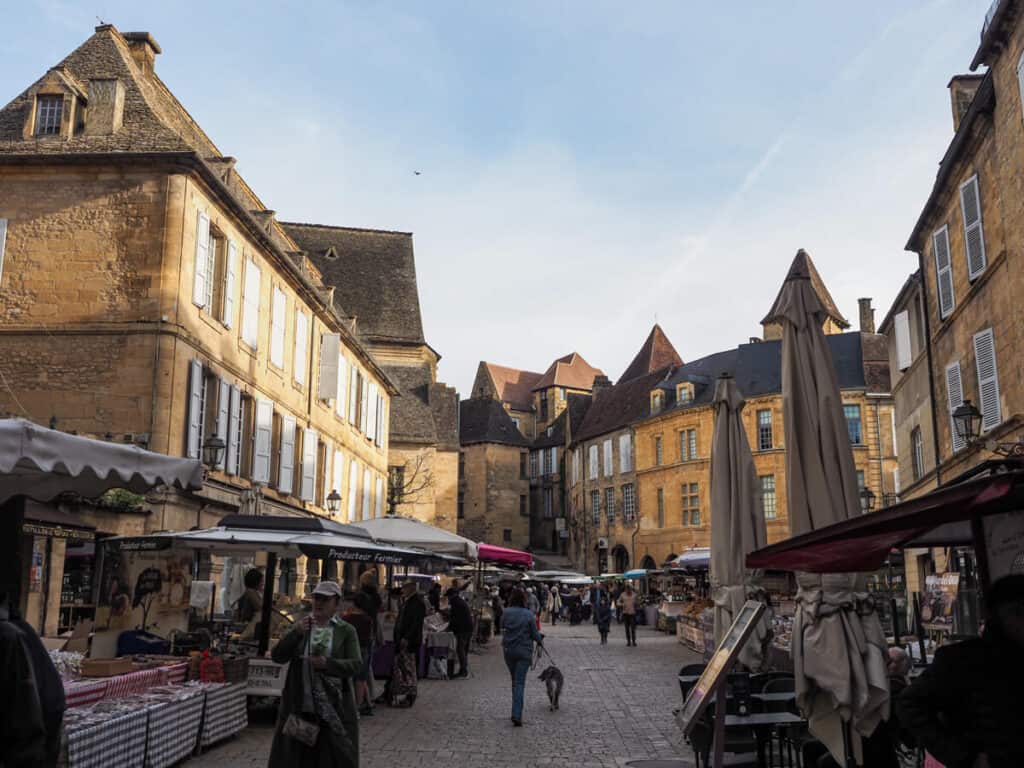
Yes you can, but it depends on how much time you’ve got! Sarlat-la-Canéda, is about a 5.5-6.5-hour drive to Avignon, meaning they aren’t super close.
That being said, if you had 10-14 days, you could realistically see both!
6. Which region is better for a week in France?
I think overall, Provence is best for a week in France.
7. Is Dordogne or Provence more off the beaten path?
Dordogne is definitely more off-the-beaten-path compared to Provence. It isn’t an unknown part of France by any means, but it is less visited compared to Provence.
There you have it! Whew-what a tough comparison!
These are actually some of my favorite areas to visit in France, and the south of France is iconic overall.
But I hope this helps you in deciding which part of France to visit on your next trip!
Which would you choose: Dordogne or Provence?
Want more South of France travel ideas? Check out these posts!
- Ultimate 10-Day Southwest France Road Trip
- 14 Days in the South of France (Provence + French Riviera)
- 7 Days in the South of France (Provence + French Riveira)
- Ultimate 5-Day Provence Road Trip
- Epic 5-Day French Riviera Road Trip
- 1 Day in Avignon
- Best Luberon Villages
- Hiking the Ochre Trail in Roussillon
- Best Things to Do in Gordes
- Best Things to Do in Saint-Rémy-de-Provence
- Ultimate Lavender Guide to Provence
- How to Visit the Lavender Fields in Sault
- How to Visit the Lavender Fields in Valensole
- 1 Day in Nice
- 1 Day in Cannes
- 3 Days in Cannes
- Best Things to Do in Grasse: The Perfume Capital of the World!
- 2 Days in Saint-Tropez & Port Grimaud
- Best Things to Do in Eze
- Best Things to Do in Cassis
- Top Things to Do in Antibes
- Best Things to Do in Saint-Jean-Cap-Ferrat
- Top Things to Do in the Dordogne + 2 Things You Can Skip
- Best Things to Do in Sarlat
- Ever After Filming Locations in the Dordogne
Pin it here!

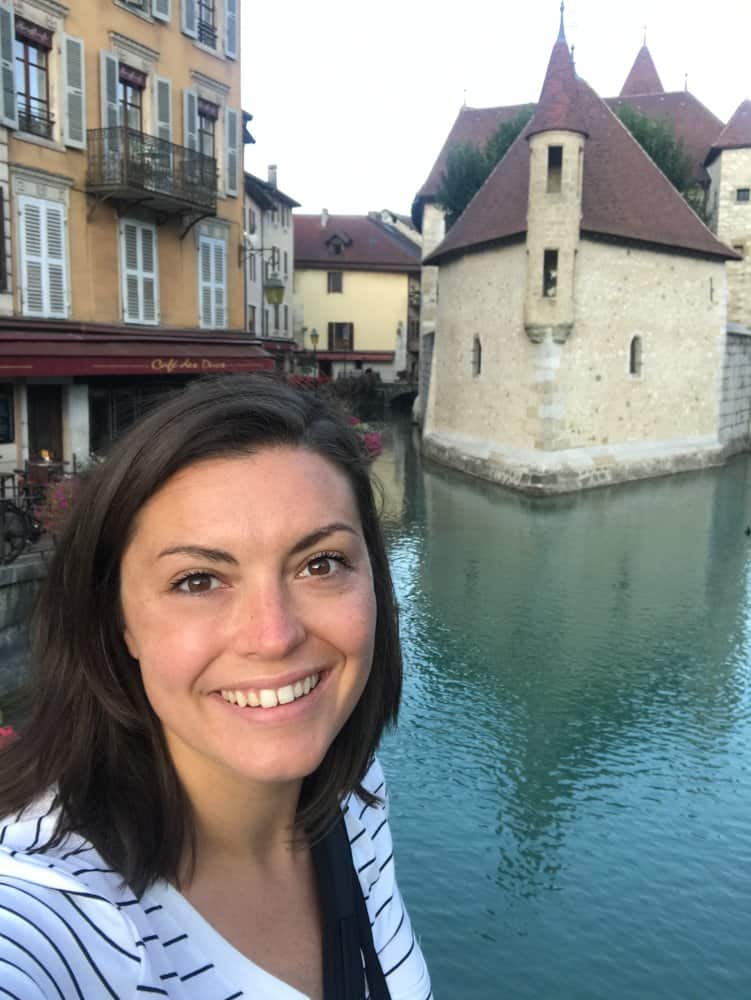
Kat is the France travel expert behind France Voyager. After studying abroad in Grenoble, she fell head over heels for the country. She has since visited many times since 2012 (including visits to 11 of the 13 regions in Metropolitan France) and is sharing all the tips for visiting France in this blog, which she has run for 5 years. Kat shares places she has traveled to and provides tips based on her own personal experiences of traveling and living in France. Aside from France Voyager, Kat also has a couple’s travel blog called World Wide Honeymoon and a podcast that she co-hosts with her husband, Chris, called the World Wide Honeymoon Travel Podcast.